Food Storage Methods
By James Okafor· Reviewed by Rebecca Torres, RDReviewed 2026-06-01
The four everyday storage methods are refrigerating (40°F or below), freezing (0°F or below), vacuum sealing (removes air, prevents freezer burn), and dry-goods storage (airtight, cool, dark). Canning gives the longest shelf-stable life but demands strict safety. Match the method to the food.
The best storage method for any food is the one that matches how the food spoils. Freeze the foods that spoil by bacteria, keep dry the foods that spoil by moisture, and seal out air for the foods that spoil by oxidation.
That single idea explains almost every choice in this guide. Raw meat spoils by bacteria — so it goes cold, fast. Ground coffee goes stale by oxidation — so it goes airtight. Dry pasta spoils by moisture — so it goes in a sealed container in a dry pantry.
The four everyday methods
- Refrigeration (40°F or below) slows bacteria for days to weeks. The fridge is for perishables you will eat this week.
- Freezing (0°F or below) stops bacteria entirely for months to years. The freezer is for anything you will not eat soon.
- Vacuum sealing removes the air that causes freezer burn and rancidity. It multiplies the quality life of frozen food.
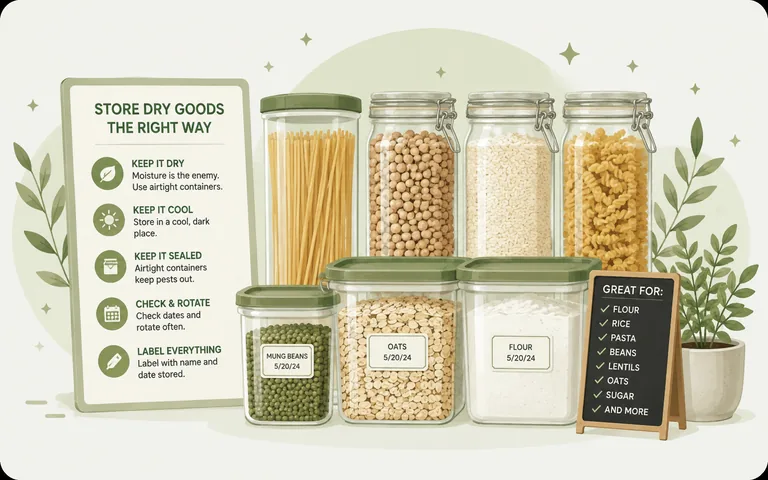
- Dry-goods storage keeps moisture and oxygen out of pantry staples in airtight containers, extending them from months to years.
The advanced method
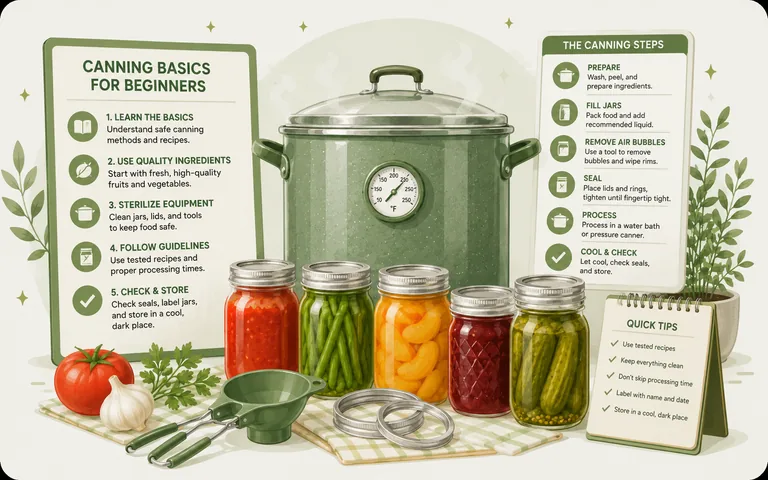
Canning is the only home method that makes food shelf-stable at room temperature for years. It is also the one with a hard safety rule: you must follow tested recipes and times from an approved source (like the USDA Complete Guide), or you risk botulism. Beginners should start with the basics guide below.
The temperature spine
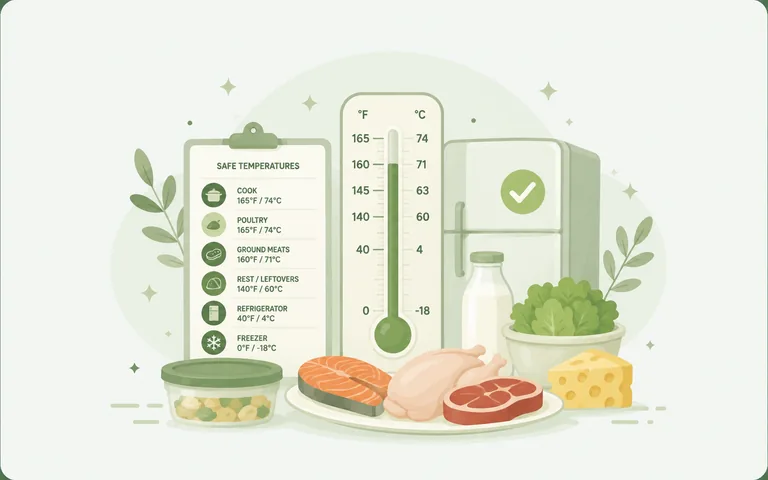
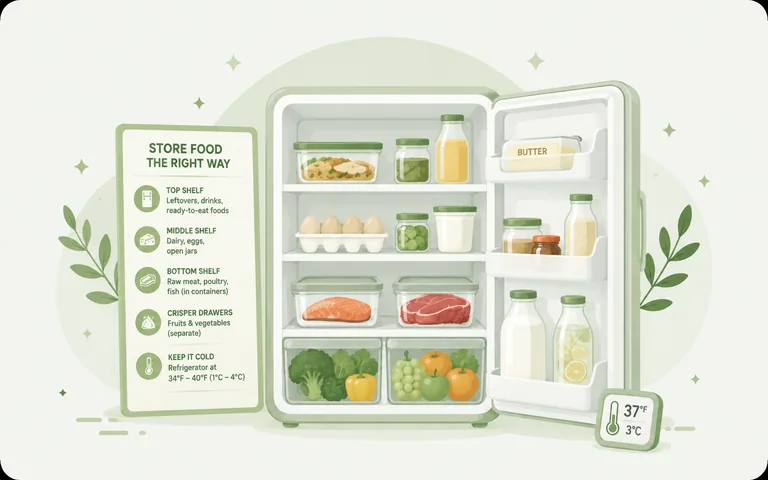
Every method assumes the right temperatures: fridge 40°F or below, freezer 0°F or below, and never more than 2 hours in the 40–140°F danger zone. If your temperatures are off, the times in every guide shrink. See the food safety temperature guide for the full chart.
Choose a method below to get the step-by-step instructions, required equipment, and storage-times table.
Dry goods
Pantry staples that stay fresh for months with the right setup.
Food safety
Temperatures, danger zones, and rules that prevent foodborne illness.
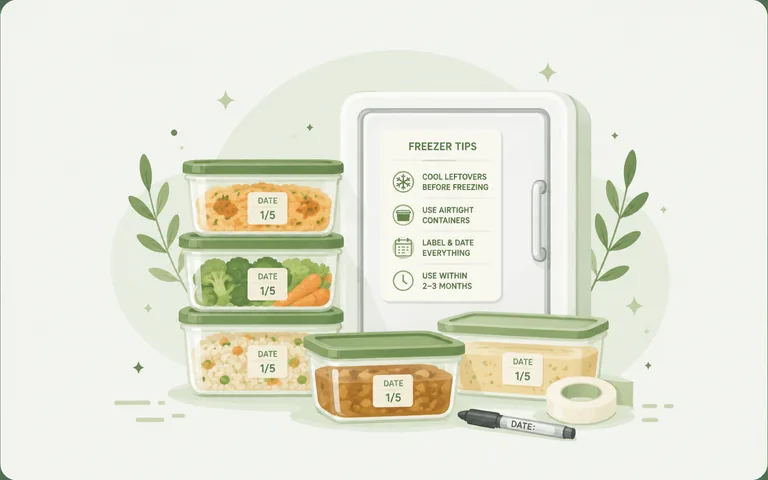
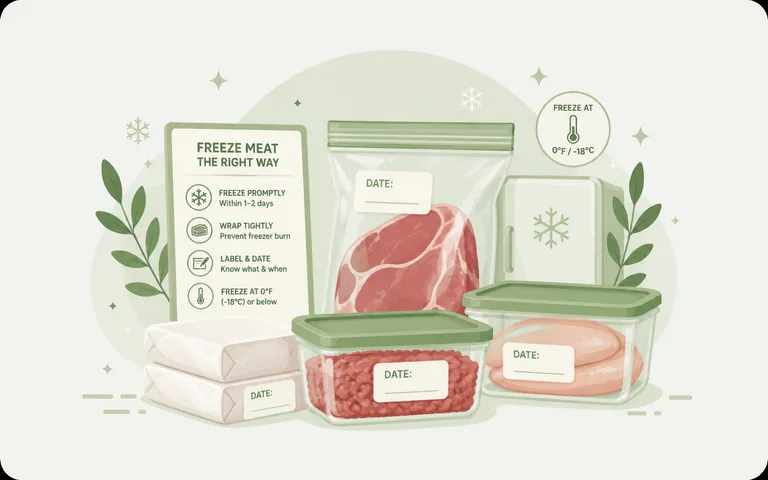
Freezing
How to freeze meat, produce, and leftovers without ruining texture.
Refrigerator storage
Keep the fridge at or below 40°F and store food the right way.
Canning
Safe home canning basics for low-acid and high-acid foods.
Vacuum sealing
Seal out air to multiply freezer and pantry shelf life.
Frequently asked questions
What is the best way to store food long term?
For long-term storage, freezing and vacuum sealing work best for meat, produce, and leftovers, while dry goods keep longest in airtight containers in a cool, dark pantry. Canning is the longest-term method for shelf-stable foods but requires strict safety procedures. Match the method to the food — see the guides below.
Is vacuum sealing worth it?
Yes for anything you freeze or store long term. Removing air prevents freezer burn, stops oxidation that causes rancid flavors, and typically triples freezer quality time. A vacuum sealer pays for itself if you buy meat in bulk or freeze seasonal produce. It is less useful for day-to-day fridge storage.
What temperature should a refrigerator be?
40°F or below — the ideal is 34–40°F. The freezer should be 0°F or below. Perishable food left in the 40–140°F danger zone for more than 2 hours must be thrown away. Use a thermometer, not the dial setting, because built-in dials are inaccurate.
How long does vacuum-sealed food last in the freezer?
Vacuum-sealed food generally keeps 2–3 times longer than food in regular wrapping. Raw meat that keeps 3–4 months wrapped keeps 6–12 months vacuum sealed, because removing air prevents freezer burn and oxidation. It stays safe even longer; quality is the limit.
Sources
Shelf-life and temperature claims on this page are cited from tier-1 food-safety authorities. Always confirm current guidance before relying on dated information.
Written by
Senior food storage writer
James Okafor writes the shelf-life guides and storage-method instructions on Home Storage Guide, translating USDA, FDA, and CDC food-safety guidance into plain-language answers.
Get the storage cheat sheet
One short email a month with the exact shelf-life numbers that matter most — plus pantry organization tips. No spam, unsubscribe anytime.
Newsletter coming soon. We are setting up our email list — this is where you will be able to subscribe.
Your email is never shared. Read our privacy policy.